


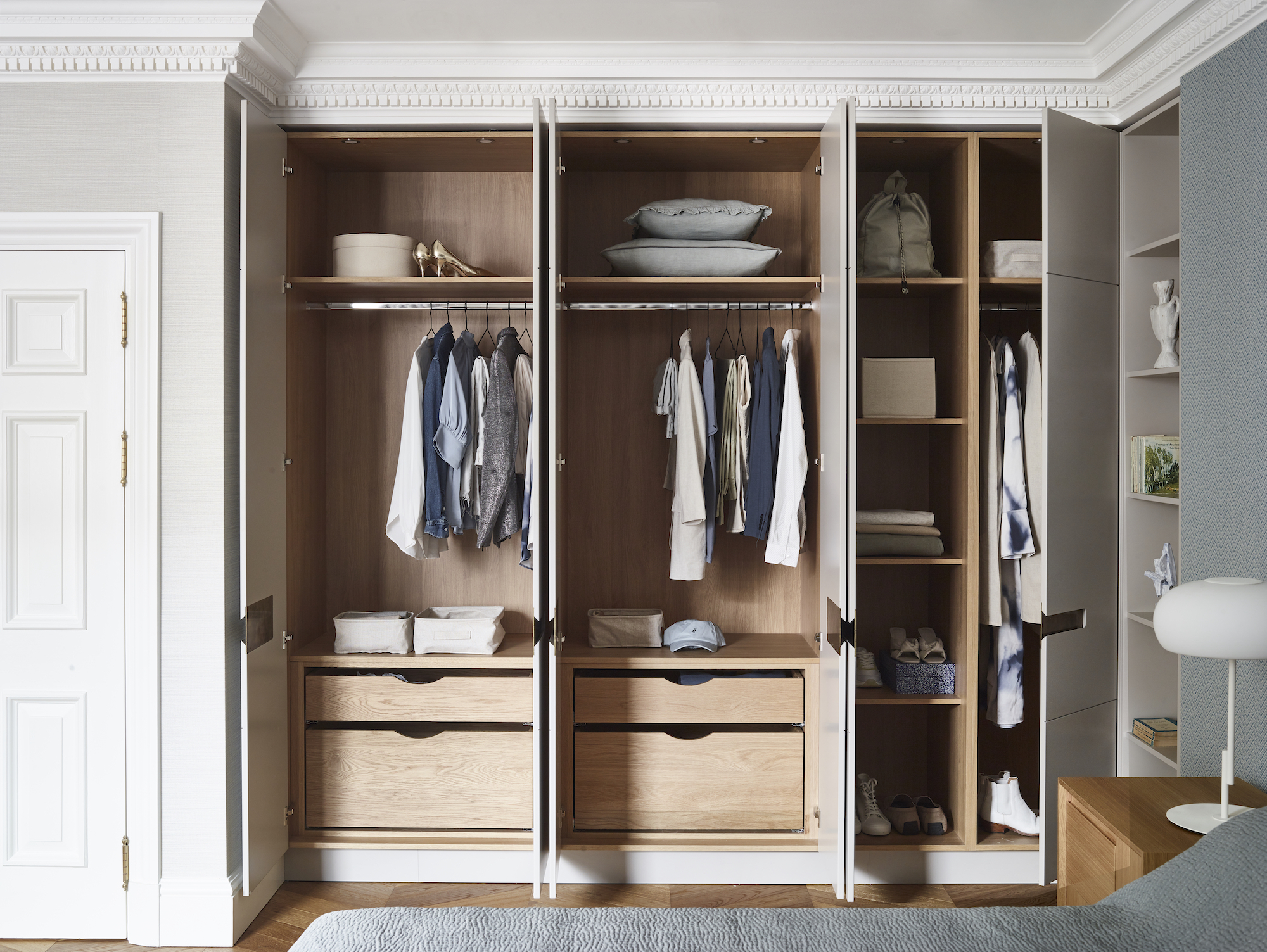
Choosing the right wardrobe is an important part of bedroom planning. In most Indian homes, wardrobe storage must handle clothes, occasional luggage, bedsheets, seasonal wear, and daily use items. A well-designed wardrobe saves space, keeps the room organised, and makes everyday routine easier.
This guide explains the common wardrobe types and practical design choices that work well for apartments and independent houses.
1. Sliding Wardrobes
Sliding wardrobes are useful when the bedroom has less walking space. The shutters slide on tracks instead of moving outward.
When to Use
- Rooms with limited space near the bed.
- Bedrooms where furniture is placed close to the wardrobe.
- Modern apartments with compact layouts.
Pros
- Saves door-opening space.
- Clean look with large panels.
Things to Consider
- Tracks need regular cleaning.
- Not ideal for very heavy shutters.
- Full access to the wardrobe at once is not possible.
2. Swing (Hinged) Wardrobes
These are the most common wardrobes in Indian homes. The shutters open outward using hinges.
When to Use
- Medium to large bedrooms.
- Homes that prefer full cabinet visibility.
Pros
- Entire wardrobe is accessible at the same time.
- Simple mechanism; long-lasting.
- Works with any internal design layout.
Things to Consider
- Requires 2–2.5 ft of space for door opening.
- Not ideal if the bed is placed very close.
3. Walk-In Wardrobes
Walk-in wardrobes are suitable for independent houses or master bedrooms with extra space. They are usually built in a separate enclosure or a niche.
When to Use
- Rooms with minimum 6–7 ft of extra space.
- Homes that need clear separation of clothing.
Pros
- Very organised layout.
- Better ventilation for clothes.
- More storage possibilities.
Things to Consider
- Requires more space and higher budget.
- Needs planned lighting and ventilation.
4. L-Shaped Corner Wardrobes
These wardrobes use the corner space efficiently. Suitable for slightly irregular room shapes.
When to Use
- Bedrooms with unused corners.
- Rooms where one straight wall is not enough.
Pros
- Maximises corner space.
- Good for shared wardrobes.
Things to Consider
- Corner unit depth must be planned carefully (usually 2 ft).
- Internal access to the corner can be slightly difficult.
5. Floor-to-Ceiling Wardrobes
These wardrobes go full height and are very common in Indian apartments.
When to Use
- For maximum storage in medium-sized rooms.
- To avoid dust collection on top.
Pros
- Extra space for suitcases and seasonal items.
- Clean, seamless look.
Things to Consider
- Upper cabinets may need a small ladder for access.
- Should align with ceiling slope or false ceiling height.
Practical Wardrobe Design Options
1. Internal Layout Planning
- A standard wardrobe depth is 22–24 inches.
- Plan the inside layout based on your daily needs.
Common Internal Sections
- Hanging space: 40–42 inches for shirts and tops; 55–60 inches for gowns and sarees.
- Shelves: 12–14 inches height is comfortable for folded clothes.
- Drawers: Soft-close options for smoother use.
- Loft: For infrequent items or luggage.
- Saree trays: Useful for easy stacking.
2. Materials for Wardrobes
Plywood
- Common choice in Indian homes.
- Works well in humid climates.
- Long-lasting when laminated.
MDF
- Smooth finishing for painted shutters.
- Suitable for dry areas.
Particle Board
- Budget friendly.
- Suitable for rental homes or temporary setups.
Shutter Finishes
- Laminate: Low maintenance, many colours.
- Acrylic: Glossy look; needs careful handling.
- Veneer: Natural wood feel; needs polishing.
- Glass/Mirror: Useful in compact rooms to reflect light.
Popular Wardrobe Designs for Bedrooms
1. Two-Tone Laminate Wardrobes
- A combination of a light base colour with a medium-tone accent.
- Works well in small and medium bedrooms.
2. Wood Finish Wardrobes
- Warm and natural look.
- Useful when the room has neutral wall paints.
3. Mirror Shutter Wardrobes
- Helps small rooms look bigger.
- Useful when you want to avoid a separate dressing mirror.
4. Sliding Glass Wardrobes
- Frosted or tinted glass adds a clean and minimal look.
- Needs a neat internal layout.
5. Open + Closed Combination
A wardrobe with closed shutters and one open niche for décor or daily-use items.
Common Mistakes to Avoid
- Making the wardrobe too deep (more than 24 inches) wastes space.
- Not checking bed-to-wardrobe distance before finalising shutter type.
- Ignoring ventilation; wardrobes need some air circulation to avoid moisture.
- Choosing very dark colours in small rooms; they make the room feel heavy.
- Not planning internal layout early; changes later increase cost.
Final Thoughts
A good wardrobe design focuses on practical storage, ease of use, and long-term durability. Instead of chasing styles, choose a type that suits your room size, daily routine, and maintenance comfort. When the structure, materials, and internal layout are planned carefully, the wardrobe will remain functional for many years.
wardrobe designs for indian homes, wardrobe types, modular wardrobe india, sliding wardrobe designs, bedroom wardrobe ideas, wooden wardrobe designs, space saving wardrobes
Why Choose Our Interior Studio for Wardrobe Types and Designs?
At our interior studio, we design wardrobes that balance storage efficiency, ease of use, and visual harmony. We carefully study room size, bed placement, door swing, and circulation space before selecting the right wardrobe type. This avoids common issues like blocked walkways or difficult access in Indian bedrooms.
Our team plans internal layouts based on daily clothing habits, storage needs, and long-term usage. We also select suitable shutters, finishes, and hardware that match the overall bedroom interior. With our professional interior planning, wardrobes become organised, durable, and seamlessly integrated into the home.

