


Smart lighting has become more accessible in Indian homes over the last few years. It offers better control, energy savings, and simple ways to improve comfort. However, many homeowners feel confused about the real benefits or costs involved.
This guide explains the latest smart lighting trends in a practical manner, based on common apartment layouts, regular usage patterns, and long-term maintenance needs.
1. Smart LED Bulbs and Tubes
Smart LED bulbs are one of the easiest ways to upgrade lighting without rewiring.
Key points:
* They fit into existing holders, making installation simple.
* Brightness and colour temperature can be controlled through a mobile app.
* Good for living rooms, bedrooms, and study corners.
Practical use:
Families can adjust lighting based on activity—brighter settings for work, softer tones for evenings.
Cost considerations:
Prices vary by brand and wattage. Frequent usage areas may need better-quality bulbs for longer life.
2. Motion-Sensor Lighting
Motion sensors are useful in areas where lights are often left on by mistake.
Suitable spaces:
* Passageways
* Bathrooms
* Utility areas
Store rooms
Benefits:
Energy saving is the biggest advantage. It also improves convenience, especially for elderly family members.
Installation note:
Wiring may need small adjustments depending on the switchboard condition.
3. Smart Switches and Retrofit Modules
Smart switches allow you to control lights through a mobile app or voice assistants.
Advantages:
* They work with existing wiring.
* No need to replace your current fixtures.
* Suitable for apartment owners who prefer minimal civil work.
Real-life application:
Useful when switchboards are far from the bed or sofa. Also helps when you want remote control or scheduling.
Cost factors:
Depends on the number of modules and type of automation. Labour cost varies between cities.
4. Tunable White Lighting
Tunable white lights allow you to shift between warm and cool tones.
Why homeowners prefer this:
* Warm light is comfortable for evenings.
* Cool white supports focus for reading or work.
* A single fixture can serve multiple needs.
* These lights work well in bedrooms, kitchens, and home offices.
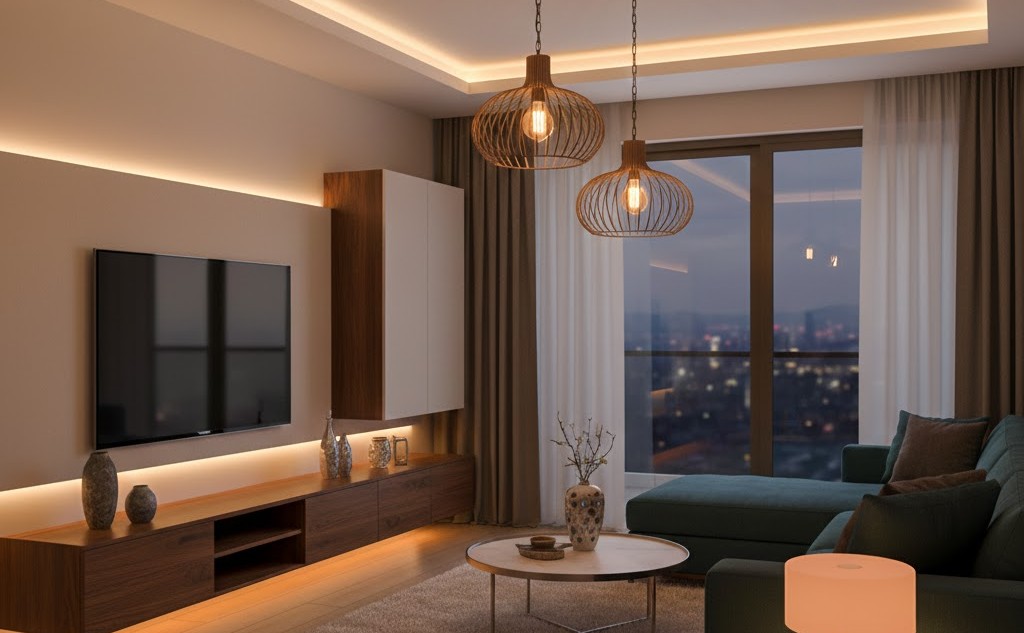
5. Cove Lighting with Smart Control
Indirect lighting, especially in ceilings and TV units, can be paired with smart controllers.
Benefits:
* Gentle light distribution
* Reduced glare
* * Better ambience for living rooms and master bedrooms
Practical note:
LED strips should be of good quality to avoid frequent replacements. Drivers must be accessible for maintenance.
6. Voice-Controlled Lighting
Voice control through assistants like Alexa or Google Home is becoming common.
Best suited for:
* Families who want hands-free operation
* Homes with disabled or elderly members
* Rooms where switches are inconveniently placed
* Important consideration:
* Stable Wi-Fi is necessary. Without it, the system loses most of its features.
7. Lighting Schedules and Automation
* Automated lighting schedules help create a predictable routine.
Examples:
* Lights turning on at sunset
* Soft lighting during early mornings
* Automatic night lamps for children’s rooms
* These functions promote energy saving and convenience without manual effort.
8. Solar-Linked Outdoor Lighting
For independent houses or bigger balconies, solar lights are increasingly used.
Advantages:
* No wiring needed
* Operates independently from home electricity
* Good for outdoor steps, pathways, and gardens
* Limitations:
*Performance depends on sunlight availability.
9. Understanding Costs and Long-Term Maintenance
Smart lighting cost ranges depend on:
* Number of fixtures
* Type of automation
Brand quality
* Labour charges and electrical modifications
* Wi-Fi setup and router capacity
* Apartments usually need fewer devices, making the cost manageable.
* Independent houses may need more modules due to larger area.
Maintenance Tip:
Choose devices with clear warranty support and simple replacement procedures.
10. Common Mistakes to Avoid
* Over-automating small spaces
* Using low-quality strips or drivers
* Installing devices without checking Wi-Fi strength
*Ignoring natural light availability
*Placing sensors where movement is blocked
*Thinking through day-to-day usage helps avoid unnecessary expenses.
Conclusion
Smart lighting trends can improve comfort and efficiency when chosen thoughtfully. The best approach is to start with essential areas, understand how the system fits your routine, and expand only where required.
With careful planning, homeowners can achieve balanced lighting that suits Indian apartment realities—limited space, shared usage, and long-term maintenance needs.

